A deep dive into Kerala’s most iconic meal — the Sadya. Learn what dishes are served, the correct order of eating, and where to find the best Sadya in Kerala.
What Is Kerala Sadya?
Kerala Sadya is a traditional vegetarian feast served on a fresh banana leaf. It usually includes more than 20 dishes, from fluffy rice and tangy sambar to coconut-rich curries and sweet payasam. In Malayalam, “sadya” simply means “banquet.” In Kerala, though, the word means much more. A sadya brings families and communities together for festivals like Onam, for weddings, and for other milestones.
A sadya is also about balance. One leaf holds sweet, sour, salty, bitter, spicy, and astringent flavours. The dishes follow seasonal produce and old Ayurvedic ideas about digestion. Sitting cross-legged in a row with dozens of strangers while servers move quickly down the line is an experience you won’t forget.
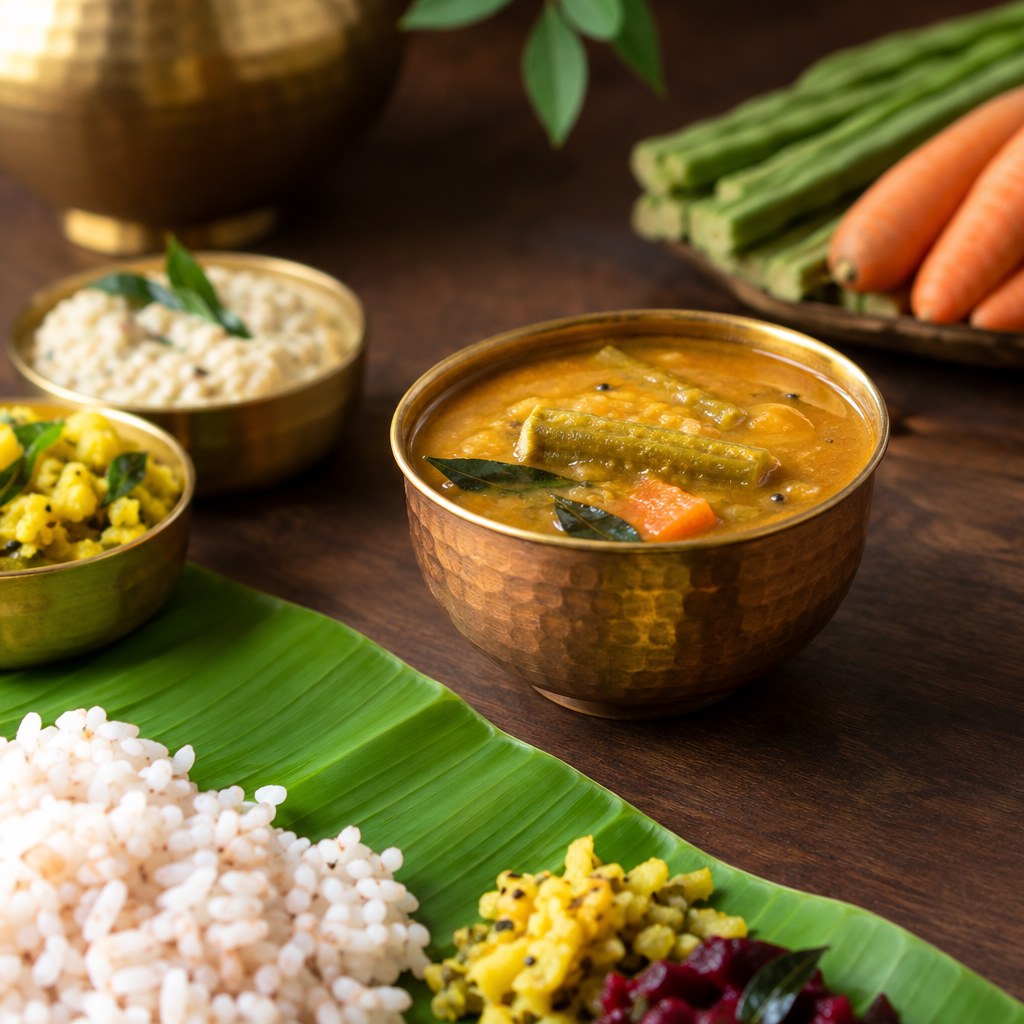
The Dishes: What’s on Your Leaf
The menu changes by region and household, but most sadyas share a familiar core. Each item has a fixed place. Small accompaniments go on the upper half of the leaf, and rice sits in the lower centre.
Rice and Curries
Kerala red matta rice is the base. It comes with parippu (lentils with ghee), sambar, rasam, pulissery or kalan (yogurt curries), and moru (spiced buttermilk).
Vegetable Sides
Avial (mixed vegetables in coconut and curd), thoran (stir-fried vegetables with grated coconut), olan (ash gourd in coconut milk), erissery, and kootu curry.
Pickles and Crunch
Mango and lime pickles, inji puli (sweet-sour ginger tamarind), pachadi and kichadi, pappadam, banana chips, and sharkara upperi (jaggery-coated chips).
Payasam
The sweet finale. It is often ada pradhaman (rice flakes in jaggery and coconut milk) or palada payasam, with a small banana served alongside.
The Traditional Order of Eating
A sadya moves in stages, and servers bring each course to you in sequence. Customs vary by region, but a common order runs like this:
Moving from sweet back to sour and cooling at the end is deliberate. Rasam and buttermilk aid digestion after a rich meal.
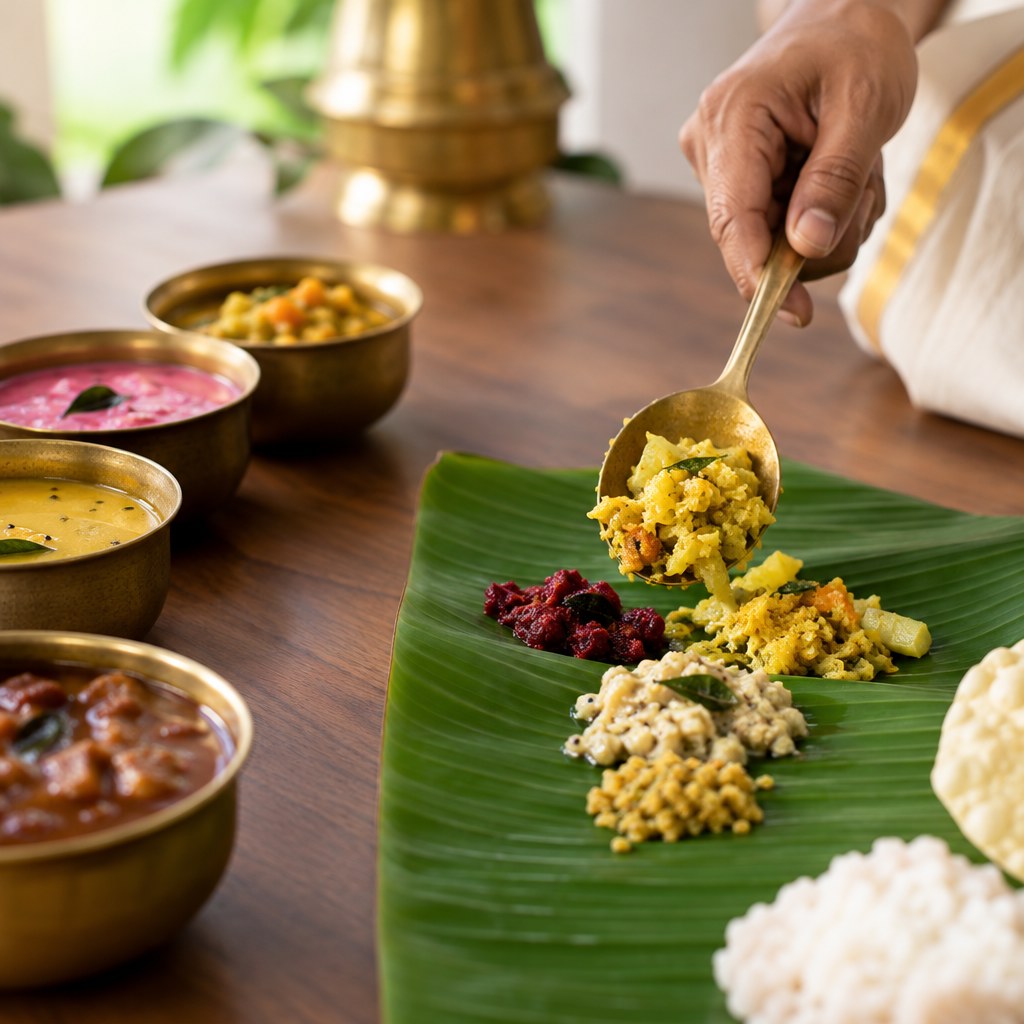
When Is Sadya Served?
- Onam: The Thiruvonam sadya is the high point of Kerala’s harvest festival. Families cook for days to prepare it.
- Weddings: Hindu weddings across Kerala traditionally end with a large sadya for guests.
- Vishu and other festivals: Sadya appears at the Malayalam New Year, at birthdays, and at housewarmings.
- Temple feasts: The Valla Sadya at Aranmula, held during the snake-boat season, is one of the most celebrated offering feasts.
Where to Eat the Best Sadya in Kerala
The most authentic sadya is usually cooked at home or at a community event. You still have good options as a visitor:
- Vegetarian restaurants: Traditional “veg hotels” in Thiruvananthapuram, Kochi, and Thrissur often serve sadya at lunch. Some serve it daily, and others only on certain days.
- Onam specials: Many restaurants and hotels take advance bookings for Onam sadya, including takeaway packs. Book early, because they often sell out.
- Homestays: Hosts in places like Alappuzha and Kumarakom may prepare a home-style sadya on request.
- Temple and community feasts: If you are invited, accept. These meals are generous and deeply local.
Tips for First-Timers
- Eat with your right hand. Mix rice and curry with your fingertips, then use your thumb to push each bite.
- The leaf is placed with its narrow tip pointing to your left.
- Don’t rush to finish everything. Servers will offer refills, so a polite hand gesture or a simple “no” is fine.
- Pour payasam into a hollow of rice, or sip it from your palm the way locals do.
- When you finish, fold the leaf toward you. In many places this signals that you enjoyed the meal.
- If you have allergies, ask about coconut, which appears in most dishes, and about dairy in the yogurt curries and payasam.
Summary
Kerala Sadya is a vegetarian banquet of 20 or more dishes on a banana leaf. It is eaten in a set order that moves from lentils and sambar to payasam and ends with rasam and buttermilk. It anchors Onam, weddings, and temple festivals, and visitors can find it at vegetarian restaurants, Onam pop-ups, and homestays. Come hungry and eat with your hands.
Plan Your Trip Around a Sadya
Visit Kerala during Onam, usually in August or September, for the most festive sadya experience of the year.
📚 Related: Kerala Food

You might also like
 Food & Culture
Kozhikode (Calicut) Travel Guide: Spices, History & Malabar Food
Guide to Kozhikode — Malabar biriyani, SM Street spice markets, Beypore wooden shipbuild…
 Food & Culture
Kerala Spice Plantations: Cardamom, Pepper, Vanilla & What to Buy
A guide to Kerala's spice plantations — the history of Malabar pepper, where to tour car…
 Food & Culture
Kerala Tea Gardens: Munnar, Wayanad & Nelliampathi — Complete Guide
A guide to Kerala's tea estates — the Munnar tea museum, factory visits, Wayanad plantat…