Why Kerala’s monsoon (June–September) is actually the best time to visit — lower prices, empty beaches, thundering waterfalls and peak Ayurveda season.
The travel industry has been advising people not to visit Kerala in monsoon season for decades. The images it conjures are of flooded roads, grounded houseboats and endless grey rain. This advice has been excellent for those of us who prefer monsoon Kerala — fewer visitors, lower prices, and a landscape of extraordinary green that photographers and artists call the most beautiful version of Kerala there is.
The Kerala monsoon runs from June to September. The southwest monsoon arrives in Thiruvananthapuram around 1 June each year — often within three days of the same date, making it one of the world’s most predictable seasonal weather events — and moves north to reach Kasaragod by mid-June.
What the monsoon actually looks like
Most visitors expecting constant rain are surprised by the actual pattern. Kerala monsoon rain is typically not the continuous drizzle of a northern European winter. It arrives in heavy bursts — 30 minutes to two hours of intense rain followed by periods of sunshine and sudden cool. By late afternoon the pattern repeats. The Western Ghats receive more sustained rainfall (Munnar in full monsoon can have several grey days in sequence). The coast tends to get sharper, more dramatic rain events.
The rivers are full. The waterfalls are at their spectacular peak. The tea estates of Munnar are an extraordinary electric green. The backwaters are brimming. The air smells of rain on laterite stone, of wet earth, of everything alive at once.
What genuinely doesn’t work in monsoon
- Beach holidays: Strong currents and rough surf mean swimming is banned or discouraged at all official beaches. Varkala’s cliffs are still dramatic to look at, but you cannot swim safely.
- Houseboats on main routes: Many operators restrict open-water routes June–July. Village canoe tours work well throughout the monsoon.
- Some ghat roads: Landslides occasionally block the mountain roads to Munnar, Wayanad and Idukki after heavy rain. Build flexibility into your schedule.
- Theyyam: The Theyyam season runs October–April. You will not see Theyyam in monsoon.
What is genuinely better in monsoon
Ayurveda — the monsoon is the traditional season
Traditional Ayurvedic medicine considers the monsoon (called Karkidakam in the Malayalam calendar) the optimal season for treatment. The theory — held for centuries — is that the reduced heat, increased moisture and softened pores make the body more receptive to herbal oils and treatments. Almost all authentic Ayurveda centres offer their best rates in the monsoon (30–50% below peak) and their most experienced practitioners have more availability. If a serious multi-day Panchakarma programme is your primary reason for visiting Kerala, June–August is the right time to come.
Waterfalls at full volume
Athirappilly waterfall in Ernakulam district — Kerala’s largest — is a modest trickle in March. In August it is 80 feet wide and roaring. The same applies to every waterfall in the Ghats: Vazhachal, Soochipara in Wayanad, Meenmutty, Palaruvi, Thusharagiri. All reach their peak in monsoon. The visual spectacle is incomparable.
Wildlife
Periyar Tiger Reserve and Wayanad Wildlife Sanctuary remain open through most of the monsoon. Bird activity is at its peak — Kerala records many of its breeding species during the wet season. The forests are dense and dramatically beautiful. Elephant sightings near Periyar’s lake edges are common. Reduced visitor numbers mean any wildlife encounter is private.
Karkidaka Ramayana month
The Malayalam month of Karkidakam (mid-July to mid-August) is traditionally when the Ramayana is read in Kerala homes. Temples across the state hold special reading sessions. For those interested in Kerala’s living Brahminical tradition, this period offers genuine access to practices not available at any other time of year.
Price
Monsoon discounts range from 30% to 50% on accommodation, Ayurveda programmes and tours. Flights from Indian cities to Kochi and Trivandrum are also cheaper. A mid-range homestay that costs ₹3,000 in January runs ₹1,800 in July.
Best Kerala destinations in monsoon
Wayanad
Arguably the most beautiful place in Kerala during monsoon. The cloud forest above Kalpetta; the bamboo groves near Sulthan Bathery; the Banasura Sagar dam at full level; the Muthanga wildlife area. It is cool — temperatures drop to 17–20°C at night. The tea plantations and paddy fields create a landscape that has no equivalent in India at any other season.
Munnar
Requires managing expectations about visibility — cloud cover frequently sits below the ridge lines, and you may have zero views for a day at a time. But when it clears, the electric green of the tea estates against dramatic grey-white clouds is genuinely extraordinary. Eravikulam National Park is usually open through the wet season (it closes Feb–March for breeding season).
Fort Kochi
Fort Kochi is excellent year-round. None of its heritage attractions are affected by monsoon. The Chinese fishing nets look their most dramatic in stormy weather. Hotel rates fall 30–40%.
Packing for Kerala monsoon
The single most important item: Crocs or waterproof sandals. Every pair of good shoes you bring will be destroyed within three days. A quality compact umbrella (cheap ones break in Kerala’s sustained rainfall). Waterproof bags for electronics. Quick-dry fabrics only — cotton dries slowly in high humidity. Anti-fungal powder for those prone to skin issues in hot, wet conditions.
📚 Related: Kerala Travel

You might also like
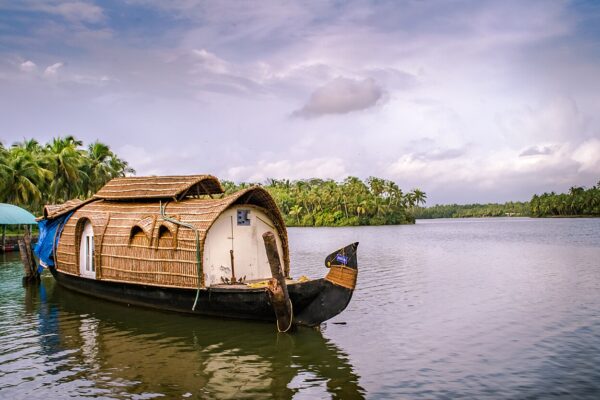 Backwaters
Kerala Houseboats vs Resorts: Which to Choose for Your Backwater Stay
Houseboat or resort for Kerala backwaters? Compare canal immersion, comfort, value and fac…
 Travel Tips
Budget Kerala: How to Travel the Entire State for Under ₹2,000 Per Day
How to travel Kerala properly on ₹2,000 per day — budget homestays, KSRTC buses, stree…