Pepper House is one of the oldest surviving commercial structures on the Malabar Coast — a 16th-century spice godown built at the height of Fort Kochi’s importance as a global pepper and spice trading hub. The building’s thick laterite walls, built without mortar and designed to maintain a cool interior temperature for stored spices, have stood for over five centuries metres from the harbour’s edge. At its peak, Kochi was the world’s most important pepper port, and warehouses like this were the operational heart of a trade that had drawn Arabs, Chinese, Portuguese, Dutch, and British merchants to the same waterfront.
Today Pepper House is one of the principal venues of the Kochi-Muziris Biennale, held every two years. The vast, cavernous interior — bare brick, wooden beams, and loading-dock proportions — provides one of the most compelling settings for contemporary art in India. The contrast between the ancient walls and large-scale modern installations is a defining aesthetic of the Biennale experience. Between Biennale periods, the space hosts exhibitions, residencies, and events.
The building sits within easy walking distance of the Chinese Fishing Nets (50 m) and Aspinwall House (100 m), making it a natural anchor point of the Fort Kochi waterfront walk. Even between exhibitions, the exterior and the surrounding harbour area are worth seeing for their architectural and historical character.
Top Attractions
One of the oldest surviving commercial buildings on the Malabar Coast — thick laterite walls built without mortar.
Monumental contemporary art installations in the cavernous warehouse interior — every two years.
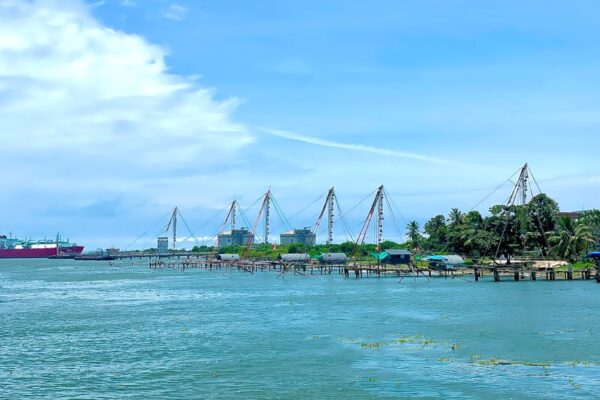
The iconic cantilevered nets at the harbour — within view of Pepper House.
1860s spice trading warehouse and primary Biennale venue — a complementary visit.
Things to Do
The cavernous interior makes Pepper House one of the most dramatically atmospheric Biennale venues — monumental installations use the full height and volume of the warehouse.
The building's laterite walls — fitted dry, without mortar, in the 16th century — are architectural history you can touch. Look for the spice stains and loading-dock ironwork.
Local Food Guide
Stays in Pepper House, Fort Kochi
Getting There
Budget Guide
| Category | Budget | Mid-range | Luxury |
|---|---|---|---|
| Accommodation / night | ₹1,200–2,500 (guesthouse) | ₹3,500–7,000 (boutique hotel) | ₹9,000–25,000 (heritage hotel) |
| Meals / day | ₹200–450 | ₹500–1,000 | ₹1,000–2,500 |
| Activities / day | ₹0–200 (most sites free) | ₹300–700 | ₹1,000–3,000 |
| 3 Nights Total | ₹2,800–7,250 (day trip from Ernakulam) | ₹12,600–22,700 (1-night stay) | ₹32,000–60,000+ (2-night heritage stay) |
Travel Tips
Pepper House is most rewarding during the Kochi-Muziris Biennale. Outside Biennale periods, check whether a show is running before visiting.
Combine with Aspinwall House (100 m) and Chinese Fishing Nets (50 m) — all three are on the same short waterfront stretch.
The Pepper House cafe (when operational during events) has a pleasant harbour-view terrace.