Kumbalangi, about 12 km south of Kochi city, holds a distinction unique in India: it is the country’s first model integrated eco-tourism village — developed through a landmark 2000 partnership between the Kerala Tourism Department and the village community itself. Set across a cluster of low-lying islands surrounded by mangrove-lined canals and the backwaters of Vembanad Lake, Kumbalangi pioneered a model of travel where tourism income flows directly to the fishing families and artisans who live here, rather than to outside resort operators.
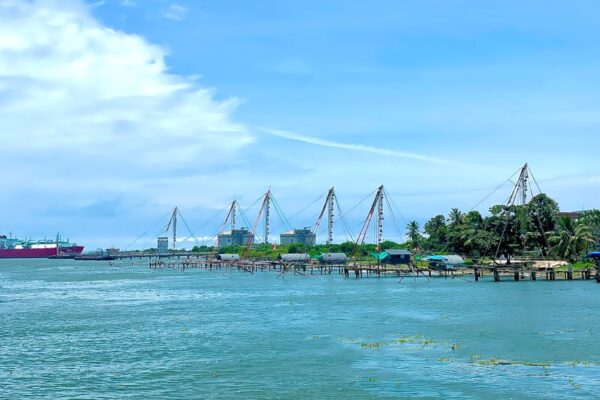
The islands are connected by narrow lanes and small bridges that are too tight for buses. Cycling and walking are the natural modes of movement, and the unhurried pace they enforce defines Kumbalangi’s character. Paddy fields, coir factories, fish ponds, and backwater channels alternate with the terracotta-roofed homes of generations of fishermen. At dawn, Chinese fishing nets are lowered into the canals. By mid-morning, women are spinning coir rope in their doorways. By afternoon, toddy tappers are heading up the coconut palms.
What distinguishes Kumbalangi from Kerala’s other backwater destinations is that these are not staged performances — they are actual daily livelihoods that visitors are invited to witness and participate in. Crab farming tours, fishing lessons, coir-weaving workshops, and cooking demonstrations all take place in working settings, not tourist parks. The catch from each morning’s fishing typically appears on the lunch table at nearby homestays the same day.
The village has received the National Tourism Award for Best Responsible Tourism Destination in India multiple times and has been cited by the United Nations World Tourism Organisation as a model for community-based sustainable tourism in Asia. The Kumbalangi Responsible Tourism Society (KRTS) — a cooperative formed by villagers — manages bookings, distributes earnings equitably, and trains guides from within the community.
Accommodation is primarily in family-run backwater homestays: waking to the sound of water, birdsong, and fishing boats rather than traffic is one of the most quietly memorable experiences available near Kochi. A day trip from Kochi is feasible (and popular), but an overnight stay is strongly recommended to experience the village at its most tranquil — at dusk and dawn, when the backwaters are at their most beautiful and the tourist groups have gone home.
Top Attractions
Traditional cantilevered nets at the village waterfront — operational every morning and evening.
Community-run mud-crab aquaculture pens with guided tours and live cooking demonstrations.
A network of mangrove-lined canals perfect for kayaking, country-boat rides, and bird watching.
The 19th-century anchor church of the island's Catholic fishing community.
Kerala's finest near-Kochi beach — excellent for a combined half-day excursion.
Chinese fishing nets, Paradesi Synagogue, St Francis Church, and colonial Mattancherry.
Things to Do
A guided country-boat cruise through the mangrove canals at dawn — birds calling, mist lifting off the water, fishermen heading out. The most evocative way to start a day at Kumbalangi.
Join village fishermen casting nets and operating Chinese fishing nets from the waterfront. The fresh catch is cleaned and grilled on the spot for a simple breakfast by the water.
Tour the community mud-crab aquaculture pens with a local farmer, learn the rearing process, then finish with a freshly cooked Kerala crab curry lunch at a village home.
Learn to spin coir rope from coconut husk and weave coir mats alongside artisans who have practised this centuries-old Kerala craft all their lives. Take home your creation.
Rent a cycle and explore the narrow island lanes past paddy fields, fish ponds, coir factories, and backwater inlets — the single best way to understand the geography and daily life of Kumbalangi.
Paddle a kayak through the narrow mangrove channels, past nesting kingfishers, herons, and the occasional monitor lizard basking on the mudflats in the morning sun.
Watch a skilled toddy tapper shin up a coconut palm to collect the fermented sap used to brew Kerala's traditional palm wine. Usually concludes with a tasting at the local toddy shop.
An evening in a local home: watch your host prepare a Kerala seafood dinner, dine on a banana leaf beside the canal, and talk about fishing life in a village that has barely changed in a century.
Local Food Guide
Stays in Kumbalangi Integrated Tourism Village
Getting There
Budget Guide
| Category | Budget | Mid-range | Luxury |
|---|---|---|---|
| Accommodation / night | ₹600–1,500 | ₹2,500–5,500 | ₹7,000–15,000 |
| Meals / day | ₹250–500 | ₹500–1,000 | ₹1,200–2,500 |
| Activities / day | ₹200–600 | ₹800–1,800 | ₹2,500–5,000 |
| 3 Nights Total | ₹3,150–7,800 | ₹11,400–25,500 | ₹32,100–67,500 |
Travel Tips
Book activities directly with the Kumbalangi Responsible Tourism Society (KRTS) cooperative — this keeps money within the community and ensures authentic local guides rather than city agents.
Arrive before 7 am on a weekday to witness the fish landing and daily auction at the village jetty — one of the most vivid and unscripted scenes in the entire Kochi region.
Carry sufficient cash: most village activity providers and homestays do not accept cards or digital payments.
The best photography light on the canals is at sunrise (golden hour) and in the 45 minutes before sunset. The Chinese fishing nets are best photographed from a low-angle boat.
Apply mosquito repellent before any evening or overnight activity near the backwaters — insects are active from dusk onwards.
Cycling is the ideal way to explore. Lanes are too narrow for cars. Cycles can be rented near the main bridge entrance. Start early to beat the afternoon heat.
Avoid visiting on a Sunday: the village sees more domestic day-trippers, which reduces the quiet, authentic feel that makes Kumbalangi special. Wednesday–Friday mornings are ideal.
During the monsoon (June–September), some boat activities are suspended and island access can be limited. Always confirm activity availability ahead of visit during this period.