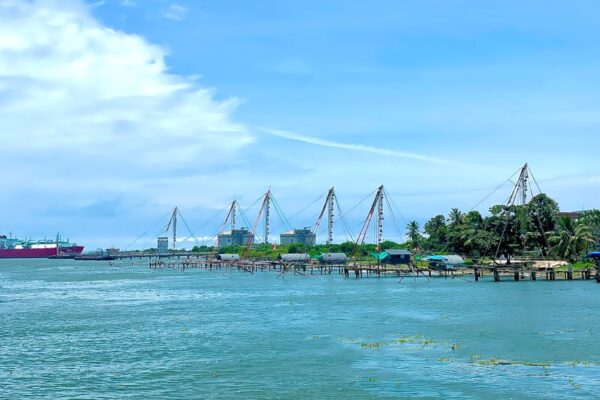
The Chinese fishing nets (cheena vala) at Fort Kochi are the most photographed symbol of Kochi and of Kerala — the large, cantilevered shore-operated lift nets that line the Fort Kochi waterfront, operated by teams of fishermen from the shores. The nets were introduced to Kerala, according to tradition, by the entourage of the Chinese explorer Zheng He (or from the court of Kublai Khan) in the 13th or 14th century, and have been a continuous feature of the Kochi waterfront since. Each net is a major structure — a bamboo and teak frame 10 metres high, with the net suspended from the frame over the water and raised by teams of fishermen using counterweights. The catch varies, but the dawn and dusk operations are among the most visually iconic scenes in India.
Other destinations nearby
Maradu Municipality adjacent to Ernakulam city is the site of the landmark 2020 …
Elamkunnapuzha is a large fishing village and harbour on the northern portion of…
St. George's Forane Church at Edappally in Ernakulam is one of Kerala's most anc…
Kalamassery is a suburb in north Ernakulam that hosts the Cochin Special Economi…
Get local tips, best time to visit, hidden gems and honest advice.