The Indo-Portuguese Museum, housed in the basement of the Bishop’s House in Fort Kochi, documents five centuries of Portuguese Catholic heritage on the Malabar Coast. Established in 1980 with a collection drawn from the Diocese of Cochin — one of the oldest Catholic dioceses in Asia, established 1557 — the museum holds religious objects, sacred silver vestments, liturgical items, paintings, coins, and navigational instruments from the 16th, 17th, and 18th centuries.
One of the most significant sections of the collection is the Kochi-style Christian art: paintings and carvings that blend Portuguese iconographic traditions with Kerala’s own artistic vocabulary. The Virgins are depicted with the features and jewellery of Kerala women; the angels have the faces of the subcontinent. This syncretism — also visible in the decorated altars and liturgical silver — reflects how Christianity was adapted and absorbed into the cultural fabric of the Malabar Coast rather than imposed wholesale. The crypt section holds some of the oldest Christian funerary inscriptions in India.
The museum is modest in scale but richly detailed, and it makes a valuable companion to a visit to Santa Cruz Cathedral Basilica and St. Francis Church. It is best combined with a full Fort Kochi heritage circuit.
Top Attractions
Paintings and carvings blending Portuguese iconography with Kerala aesthetics — one of the most unusual art traditions in India.
16th–18th century liturgical silverware from the Diocese of Cochin, one of the oldest Catholic dioceses in Asia.
Oldest Christian funerary inscriptions in India, in the museum's lower level.
The active Minor Basilica just steps from the museum — the two make a natural pairing.
Things to Do
Look closely at the paintings and altarpieces for the distinctly Kerala elements — local facial features, traditional jewellery, and coconut-palm motifs — blended with European Christian iconography.
The 16th–18th century liturgical silver — chalices, incense burners, processional crosses — represents some of the finest surviving Portuguese-Indian craft.
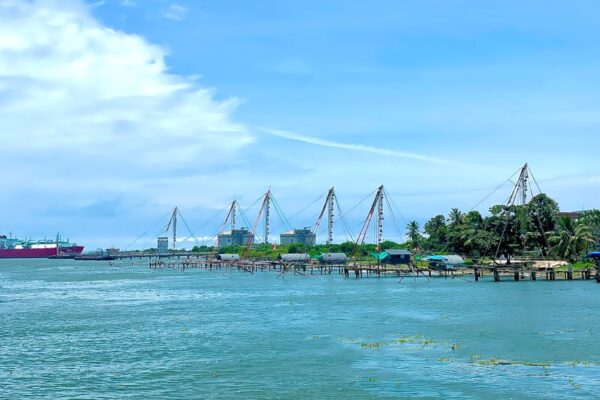
The museum is part of the Fort Kochi heritage circuit: Santa Cruz Basilica (100 m), St. Francis Church (300 m), Princess Street (350 m), and Chinese Fishing Nets (550 m).
Local Food Guide
Stays in Indo-Portuguese Museum, Kochi
Getting There
Budget Guide
| Category | Budget | Mid-range | Luxury |
|---|---|---|---|
| Accommodation / night | ₹1,200–2,500 (guesthouse) | ₹3,500–7,000 (boutique hotel) | ₹9,000–25,000 (heritage hotel) |
| Meals / day | ₹200–450 | ₹500–1,000 | ₹1,000–2,500 |
| Activities / day | ₹0–200 (most sites free) | ₹300–700 | ₹1,000–3,000 |
| 3 Nights Total | ₹2,800–7,250 (day trip from Ernakulam) | ₹12,600–22,700 (1-night stay) | ₹32,000–60,000+ (2-night heritage stay) |
Travel Tips
The museum is closed on Sundays and public holidays; check hours before visiting.
Combine with Santa Cruz Cathedral Basilica next door — the two together give a comprehensive picture of Portuguese Catholic heritage in Kochi.
Photography restrictions apply inside; check at the entrance.
The collection is modest in scale but historically significant — allow 45–60 minutes for a thorough visit.