Fort Pallipuram, also known as Ayikkotta Fort, stands on the northern shore of Vypeen Island as one of the most historically significant and least-visited monuments in Kerala. Built by the Portuguese in 1503 — just eleven years after Vasco da Gama’s first arrival in India — it is widely documented as the oldest surviving European fort in Asia. Despite this extraordinary distinction, the fort receives only a fraction of the visitors that Kochi’s more celebrated colonial sites attract.
The fort’s design is unmistakably Portuguese in its hexagonal plan, low-lying profile, and the distinctive circular bastions that project from each of its six corners. Built in laterite and lime mortar, it was originally constructed as a watchtower and toll post to control river traffic approaching Kochi from the north. It passed successively to the Dutch (1663) and the British (1795) before being transferred to the Archaeological Survey of India, which now maintains it as a protected monument.
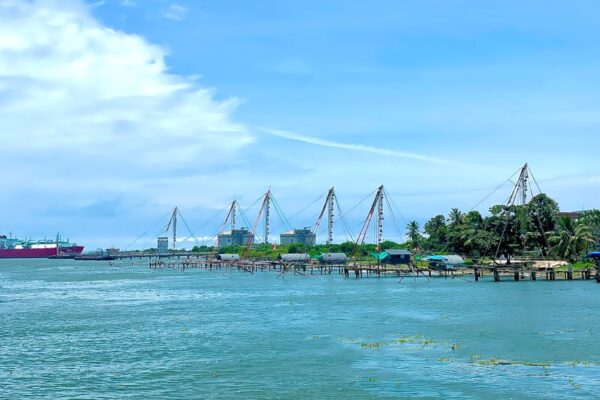
The fort sits at the water’s edge overlooking the estuary where the Periyar River flows into the backwaters. The setting is strikingly beautiful and largely unchanged — rice paddies, coconut groves, and traditional fishing boats form a backdrop that would have been familiar to the Portuguese garrison that first occupied this post more than five centuries ago. The interior is accessible; a small gateway leads into a quiet courtyard, and the cannon emplacements on the bastions still command their original views across the river mouth.
Top Attractions
A quiet, unspoilt fishing beach at the mouth of the Periyar River — excellent for sunrise walks.
Vypeen's most celebrated beach, accessible by road from Pallipuram.
One of Kerala's most active mechanised fishing harbours; spectacular during the pre-dawn fish landing.
Things to Do
Walk the hexagonal ramparts, inspect the original Portuguese-era cannon emplacements, and read the ASI interpretation boards inside.
The fort's eastern bastion commands a superb view of the Periyar River estuary — golden at sunrise and sunset.
The fishing village around the fort is authentic and unchanged — narrow lanes, boat-repair yards, and seafood stalls.
Local Food Guide
Stays in Fort Pallipuram (Ayikkotta Fort), Vypeen
Getting There
Budget Guide
| Category | Budget | Mid-range | Luxury |
|---|---|---|---|
| Accommodation / night | ₹800–2,000 | ₹3,000–6,000 | ₹8,000–18,000 |
| Meals / day | ₹150–350 | ₹400–800 | ₹1,000–2,000 |
| Activities / day | ₹0–200 | ₹200–600 | ₹600–1,500 |
| 3 Nights Total | ₹2,750–7,350 | ₹10,200–20,800 | ₹28,400–59,500 |
Travel Tips
The fort is best visited in the morning when the low eastern light falls directly on the Portuguese laterite masonry — the texture of the 500-year-old stonework is extraordinary.
Combine with Munambam fishing harbour (3 km north) for a complete picture of Vypeen's Portuguese heritage and its living fishing culture.
The ASI caretaker at the fort gate is usually present on weekdays; speak to him for historical context not covered by the interpretation boards.
No entry fee, but contributions to the caretaker are appreciated. Bring water — there are no facilities inside the fort.