Edacochin (Edat-Kochi in Malayalam) is a narrow strip of land south of Fort Kochi that has been home to one of Kerala’s oldest Latin Catholic fishing communities for over four centuries. Unlike Fort Kochi, which has been transformed into a heritage tourism district, Edacochin remains a working residential settlement — an extraordinary survival of colonial-era coastal Kerala culture in its original and lived-in form.
The community’s Portuguese roots are visible in the surnames of its residents, in the Latin rite of its churches, in the style of its older homes, and in the craft of its fishing boats — narrow wooden vessels called patamars whose design has changed little in three centuries. The area contains several heritage churches dating from the 16th to 19th centuries, small chapels on the roadside, and cemeteries whose inscriptions document the community’s history in Portuguese and Latin as well as Malayalam.
Edacochin is best explored on foot along its single main road, which runs parallel to the coast. The road is lined with modest homes, small boat-repair workshops, fishing net-mending yards, and simple churches. The seafront is fringed with fishing boats and the smells of drying fish and sea air. It is an immersive experience in a side of Kochi’s heritage that is entirely absent from the glossy heritage tourism narrative of Fort Kochi — authentic, unrestored, and completely free of tourist infrastructure.
Top Attractions
A 19th-century Latin Catholic church serving the Portuguese-descended fishing community — fine interior woodwork.
Traditional wooden fishing boat workshops where patamars are still built and repaired by hand.
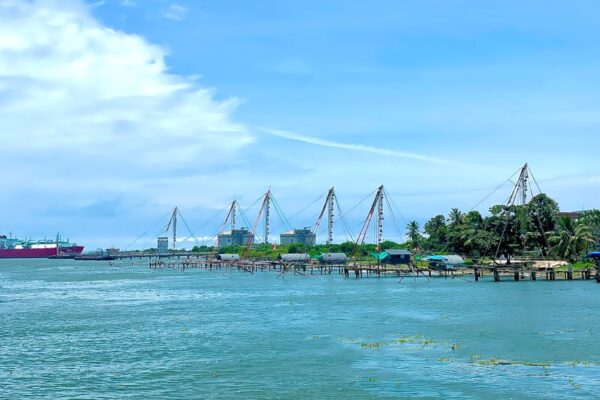
Chinese fishing nets, Paradesi Synagogue, Dutch Palace, and the colonial Fort Kochi precinct.
India's first model eco-tourism village — a natural complement to an Edacochin heritage visit.
Things to Do
Walk the entire length of Edacochin's main coastal road — church to church — stopping at boat yards, fishermen's homes, and roadside shrines.
Visit the Latin rite churches and their cemeteries — the inscriptions document four centuries of a unique Indo-Portuguese coastal community.
Watch the boat builders at work — the traditional patamars are among the last traditionally built wooden fishing craft still in use on the Kerala coast.
Local Food Guide
Stays in Edacochin Heritage Village, Kochi
Getting There
Budget Guide
| Category | Budget | Mid-range | Luxury |
|---|---|---|---|
| Accommodation / night | ₹800–2,000 | ₹3,000–8,000 | ₹8,000–20,000 |
| Meals / day | ₹150–350 | ₹400–900 | ₹1,200–2,500 |
| Activities / day | ₹0–200 | ₹200–600 | ₹600–2,000 |
| 3 Nights Total | ₹2,750–7,550 | ₹10,600–24,500 | ₹29,200–72,500 |
Travel Tips
Edacochin is a quiet residential community — dress conservatively when visiting the churches, ask permission before photographing inside homes or workshops, and keep noise to a minimum.
Combine with Fort Kochi for a complete Kochi heritage day: Fort Kochi in the morning, Edacochin at midday, Mattancherry in the afternoon.
The annual feast of the parish church (usually October) is a major community event — colourful procession, decorated streets, and local food stalls.
There are no formal guides available; the walk is best done independently with a basic map. Local residents are generally happy to speak about their community's history if approached politely.